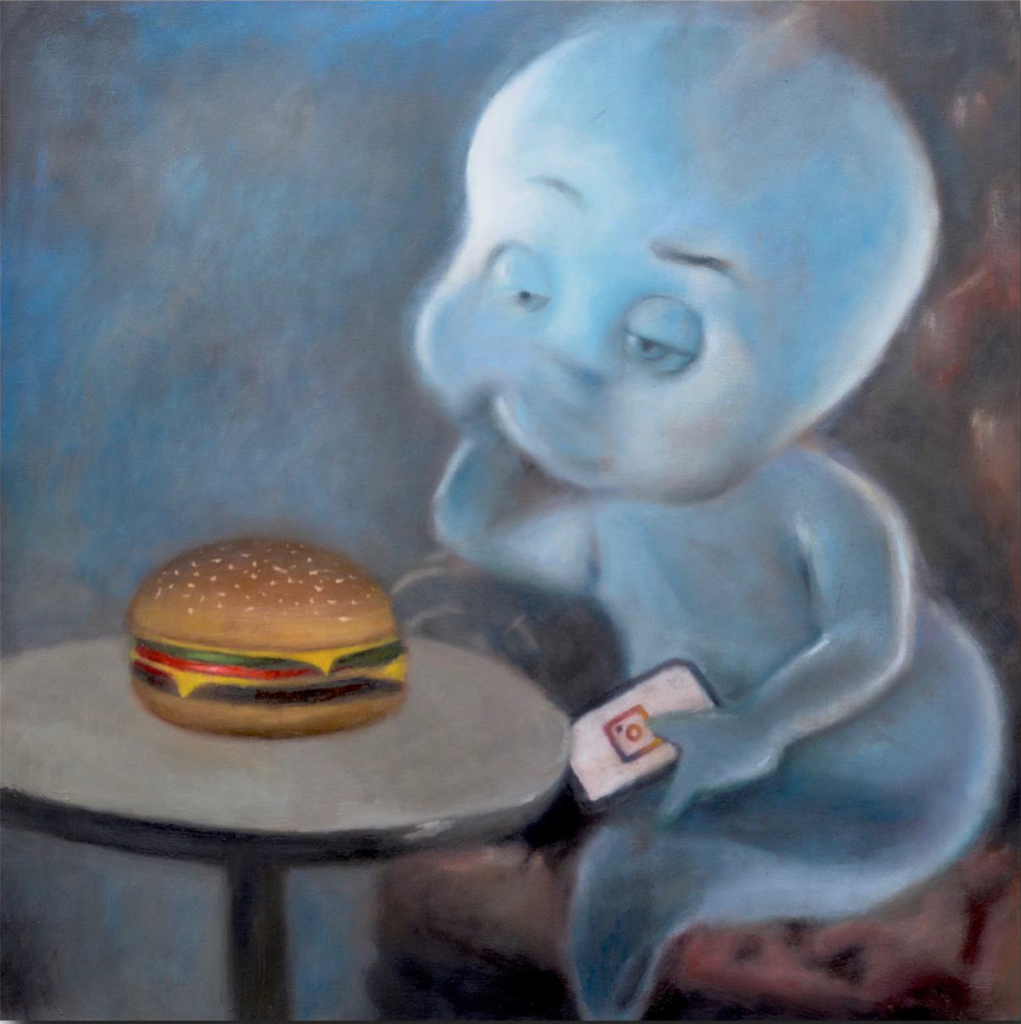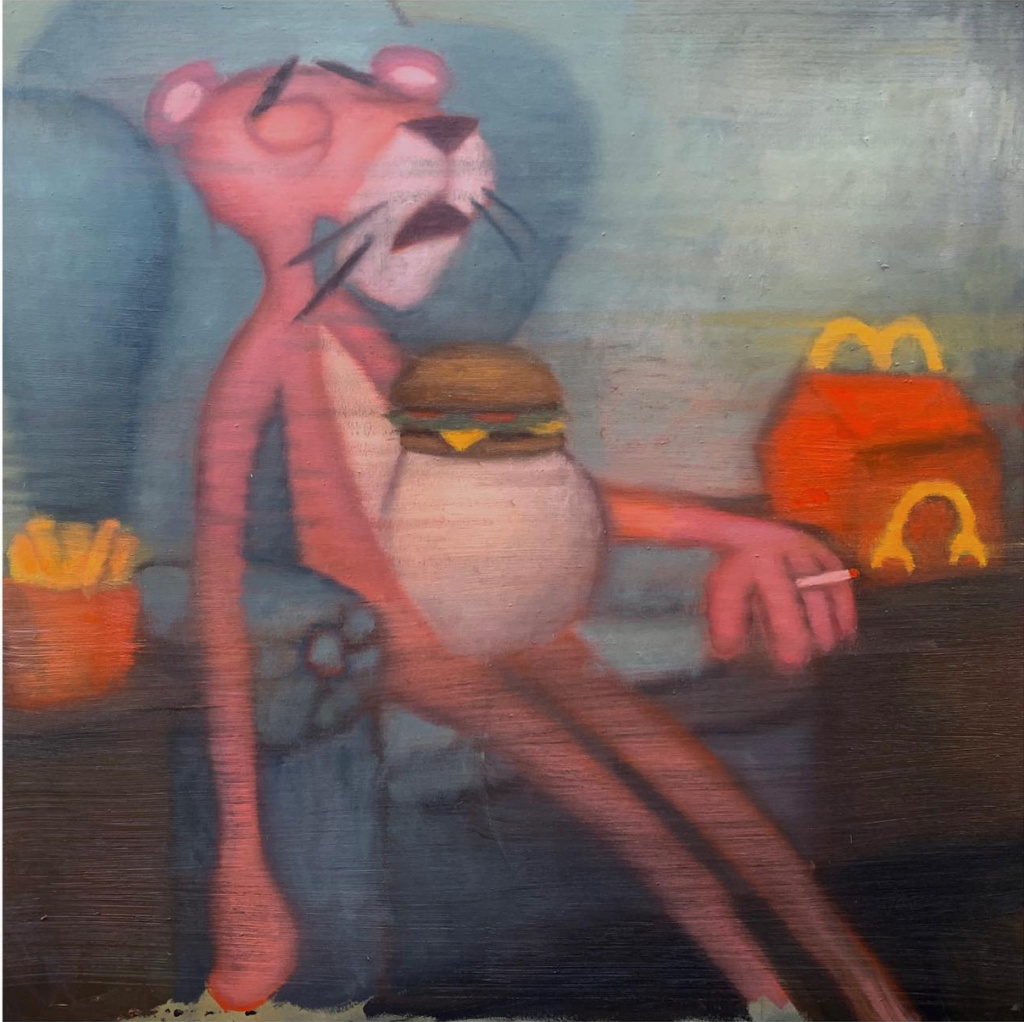
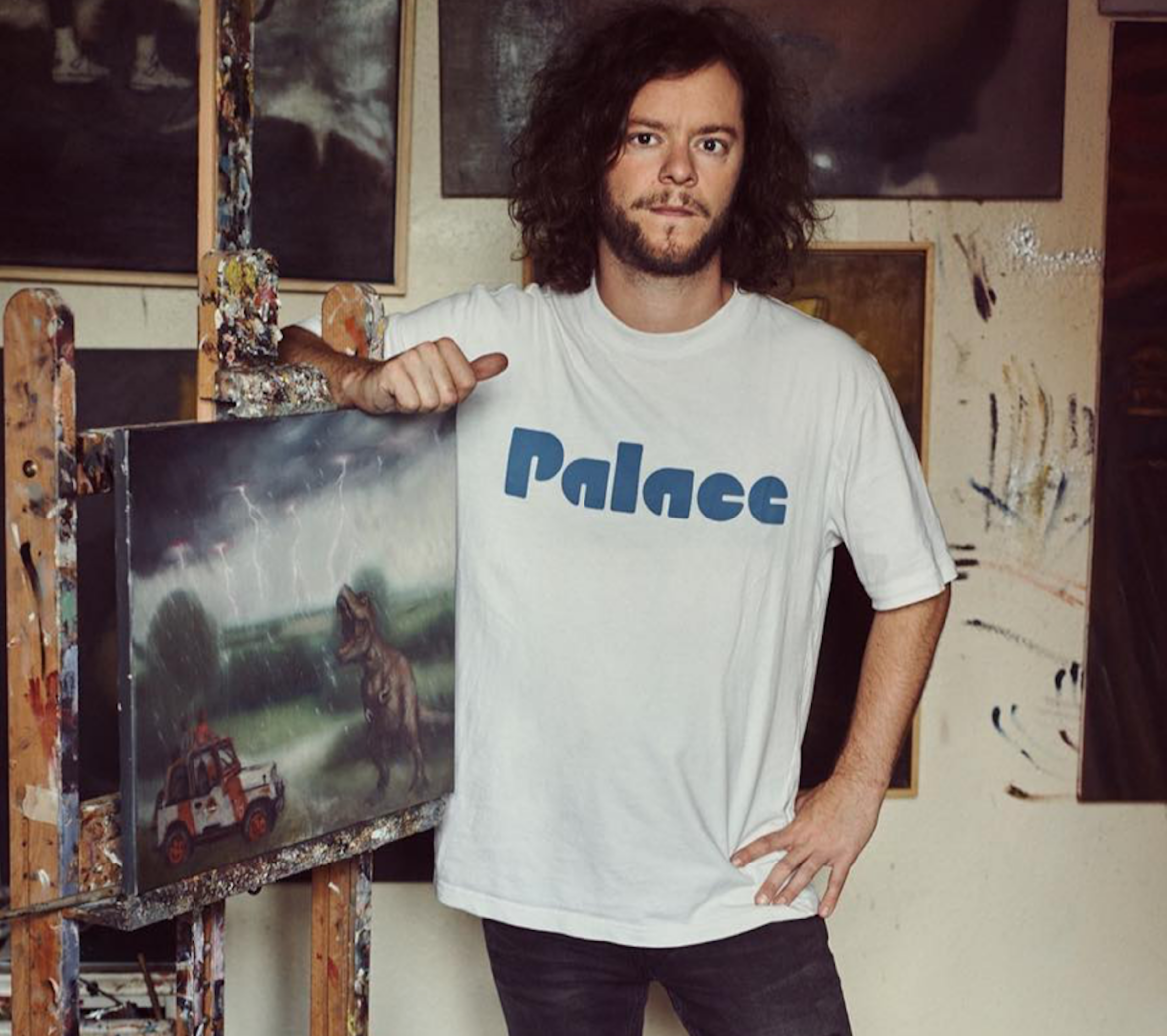
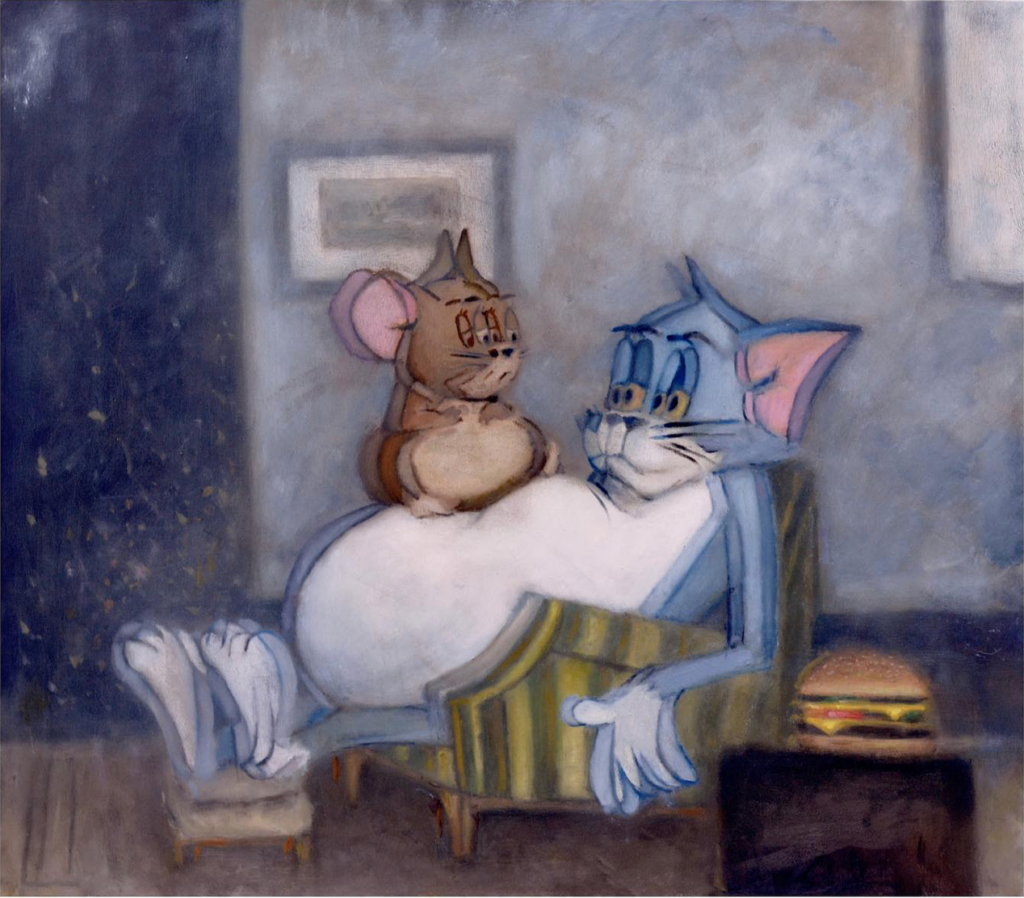
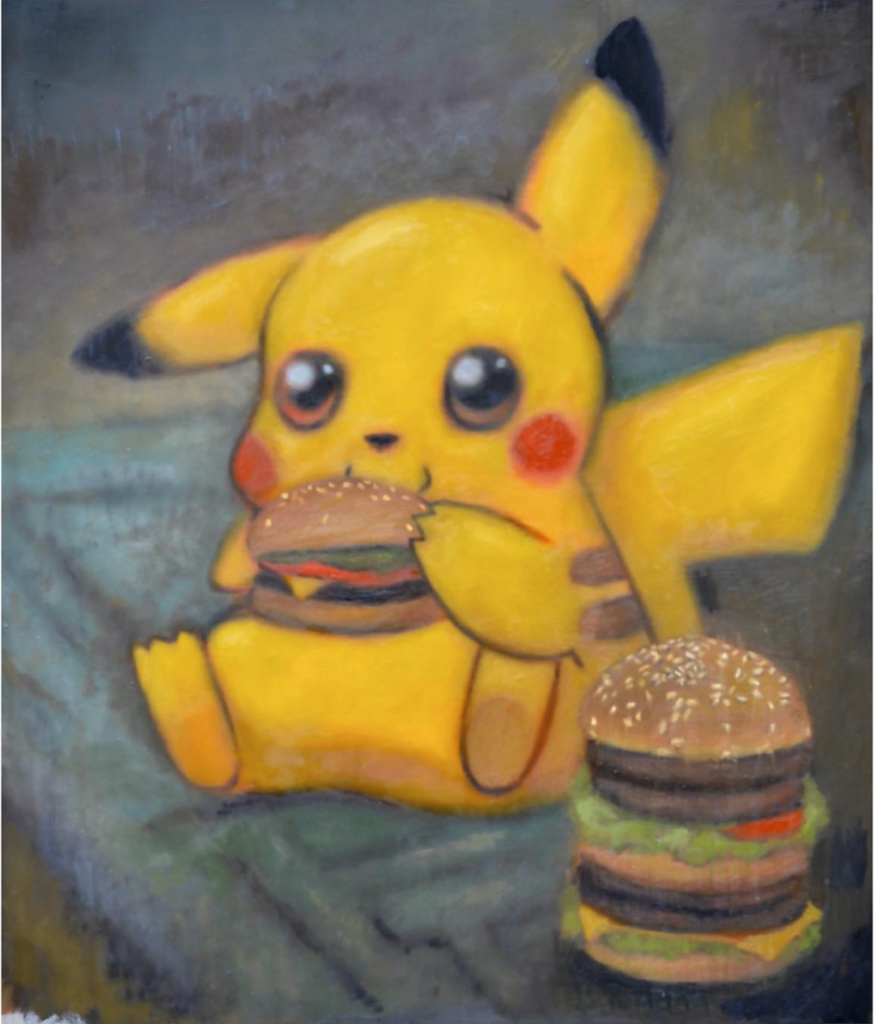
Tim Gatenby is a contemporary British figurative artist working predominantly in oil paint. Much of his work borrows images from popular culture which he reinterprets to create humorous parodies. A playful nostalgia can be found in Gatenby’s work which subverts not only subject matter, but also technique; his blurred out visions challenge art’s relationship with the Internet world we now inhabit.There is a twisted nostalgia to Gatenby’s paintings which distort familiar characters, typically drawn as brightly-coloured and crisp cartoons, by blurring lines between classical painting and modern imagery.Often combining deconstructed cartoon characters with dark humour, Gatenby’s work reflects the pressures of consumerism and modern societal tendency towards over indulgence. Fast food is an ever present theme in his paintings and is used as a vehicle to convey the easiness of modern life. The radical notion that never has becoming obese required less effort.Despite the darkness found in the various styles and themes explored, there are often playful, idiosyncratic moments that crop up, as if for his own amusement as much as the viewer’s. A joke or pun can be found through a depicted object seen out of place, or an expectation subverted by an oddity, giving the work a comedic touch of the absurd to cleverly contrast the darkness found elsewhere.
Hi Tim, it’s a pleasure to sit down with you. First question.. Where did you grow up?
I grew up in Stratford-upon-Avon in the English countryside, it is the town that William Shakespeare is from so was quite a theatrical environment. Whilst the centre of the town is a very popular tourist destination it is simultaneously very remote which allowed a lot of space for my imagination growing up. There is not a great amount to do in Stratford, other than go to the theatre which meant I looked forward to moving to a more exciting place.
Makes sense… So where did you move to? And what is the Art scene like there?
At 18 I moved to London to study film at University which was great because it was around the time Street art was booming with artists like Banksy and Ben Eine, I lived in Shoreditch where most of it was going on. Perhaps it was the influence of this exciting moment in art that got me into painting which eventually led me to studying classical painting in Florence. One of the great strengths of London is the amount of galleries and museums, most of which are free so you are really spoiled for art. At the moment the art scene is very strong with great galleries like Moosey, Ojiri Gallery and Carl Kostyal.
How long did you study in Florence? And how would you compare Italy’s art scene to the English? Both countries having some of the most important cultural history in the world.
In Florence I studied classical portraiture for three years at Charles H. Cecil Studios. The school was very strict in its approach, teaching students the ‘sight’size’ approach as used by John Singer Sargent. It is the perfect place to study traditional oil painting techniques as there are so many great examples of portraiture in the city and of course it is where the Mona Lisa was painted. Living in Florence you really get a sense of the immense history as all the architecture is untouched giving it the feel of a Disneyland for grown ups. As well as many churches and museums housing masterpieces from hundreds of years ago there is also Palazzo Strozzi which shows contemporary exhibitions which was always a refreshing escape.
Moving between Florence and London is very strange and certainly took a while to adapt from living in the past to living in the present.
How long have you been painting?
Growing up my main interest and ambition was to be a filmmaker but at around 16 I discovered painting. The British art scene has always been pretty exciting going from the YBAs to the street art movement, visiting the Saatchi gallery show Sensations really inspired me, artists like The Chapman Brothers and Marcus Harvey had twisted and humorous takes on Pop Culture which felt a bit less pretentious than art can sometimes appear.
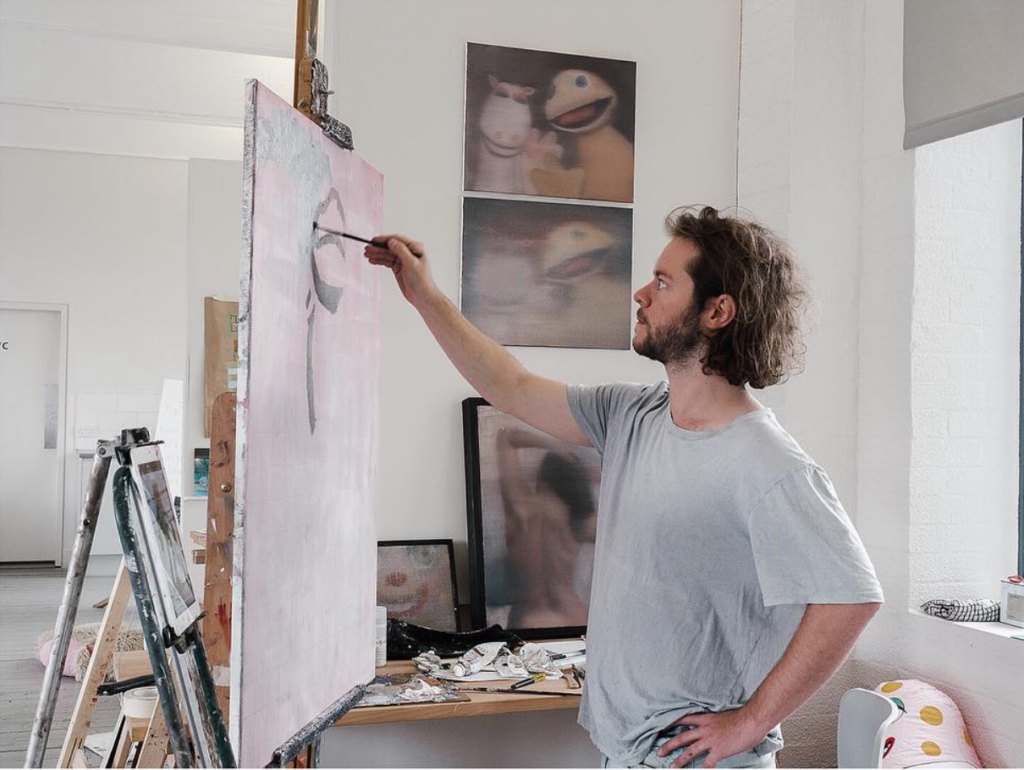
When and how did you develope your unique blurred style?
The blurred style in some ways is partly down to my poor eyesight. Being short sighted and being told to wear glasses since I was seven meant that things have always been pretty blurry. Incorporating this effect into my paintings means that I can also give what I consider a sense of a fading memory. To me it is the idea of an unobtainable image drifting slightly away from the viewer. I try to paint the images very quickly in one session and then drag big brushes through at the end, blurring it out, this reflects a passing of time and nostalgia for me.
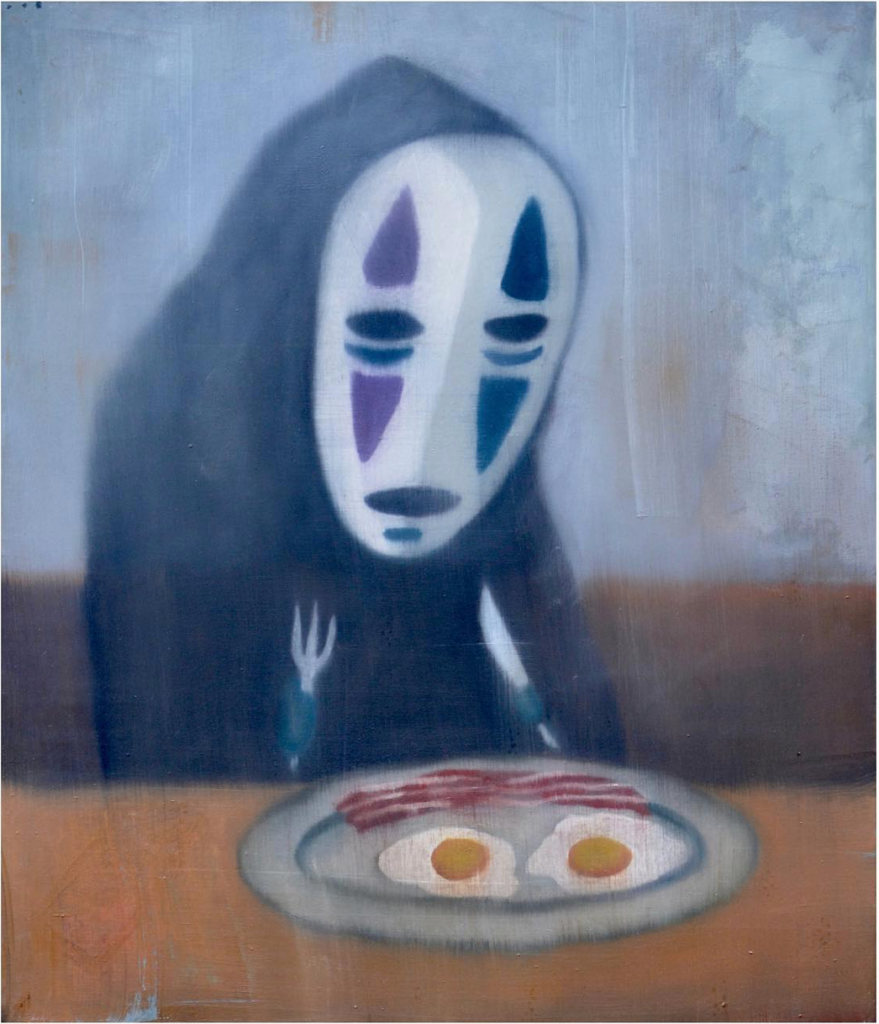
It’s interesting that your poor eyesight is the main cause for your painting style. Did you know that Rembrandt, Degas, da Vinci, Monet, Renoir and Picasso, to name a few, all suffered from some sort of visual impairment? And do you think that seeing the world differently somehow makes you more creative or a better artist?
I’m not sure if having bad eyesight helps that much with being a better artist but I suppose it does change ones perception of the world. I sometimes think about getting laser eye surgery but then worry it would alter my personality too much!
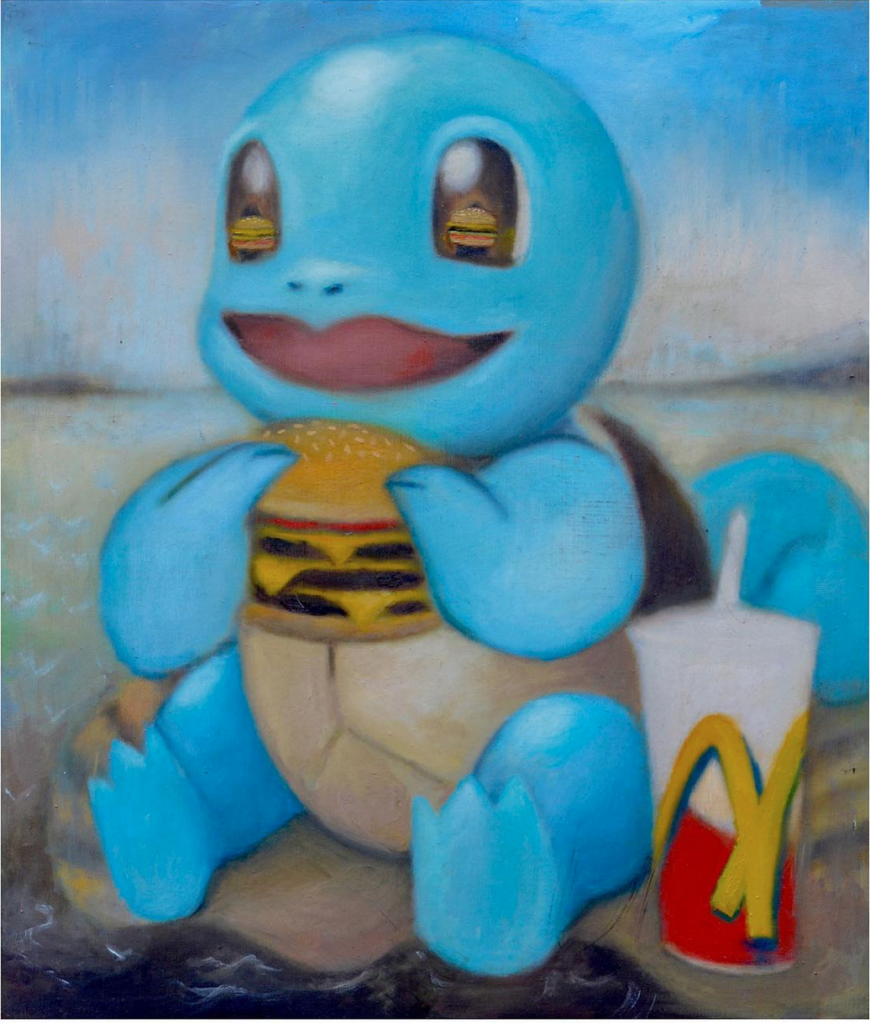
You paint legendary characters that are household names, such as: Terminator, Rambo and Pikachu. What is your thought process like when choosing them for a painting?
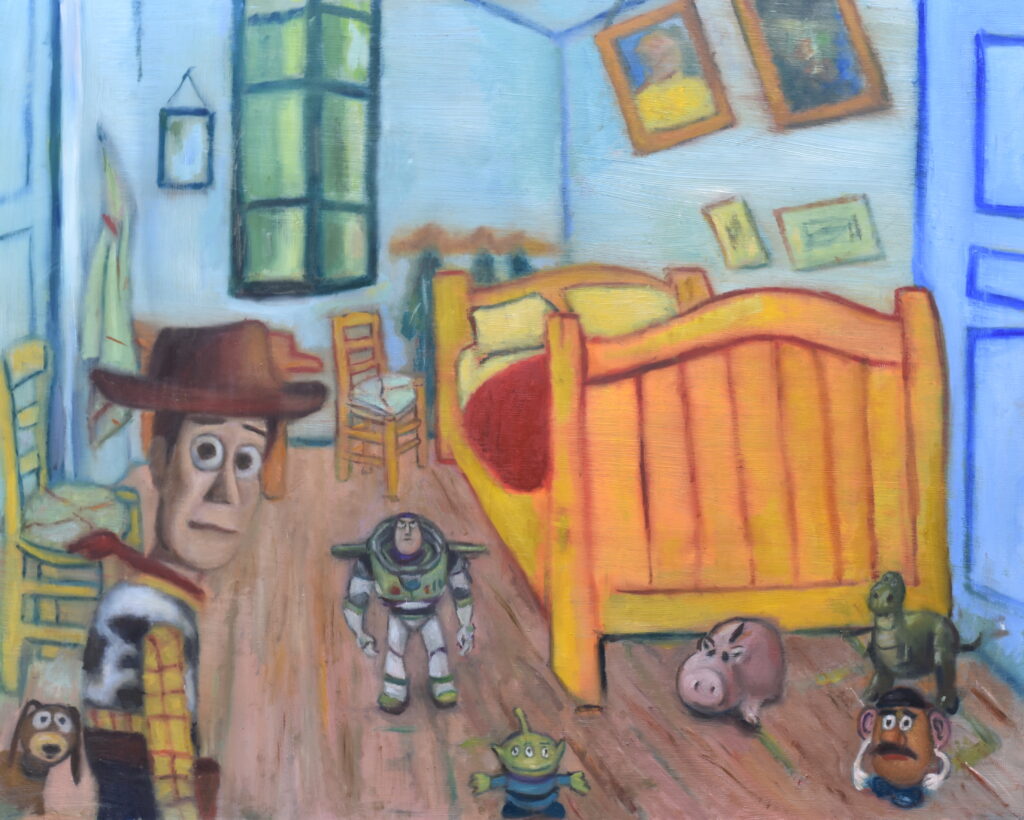
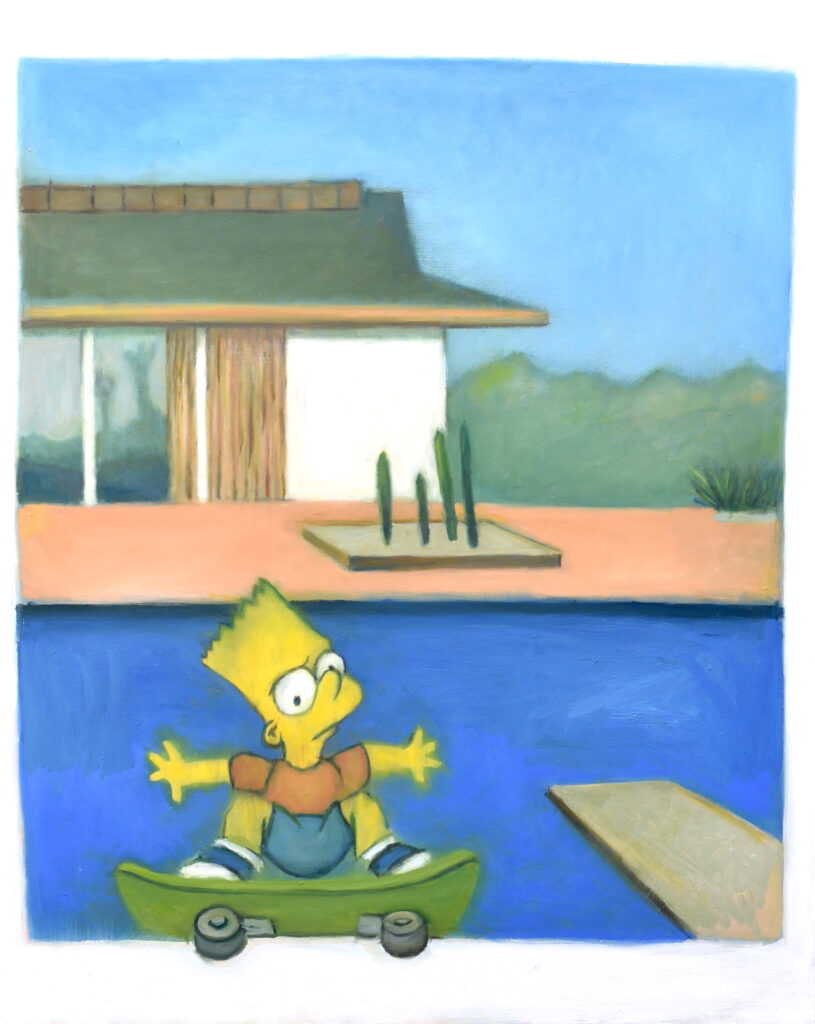
By using the imagery of legendary characters the images become immediately relatable and accessible for a larger audience, sometimes in the past when I have painted more personal subject matters like portraits then it is harder for audiences to feel a part of the painting themselves. Most of the time I will choose characters that I have been thinking about at that particular point in time because of a certain nostalgia that I have for them. Other characters are somehow reassuring and fit into many different situations like the Muppets.
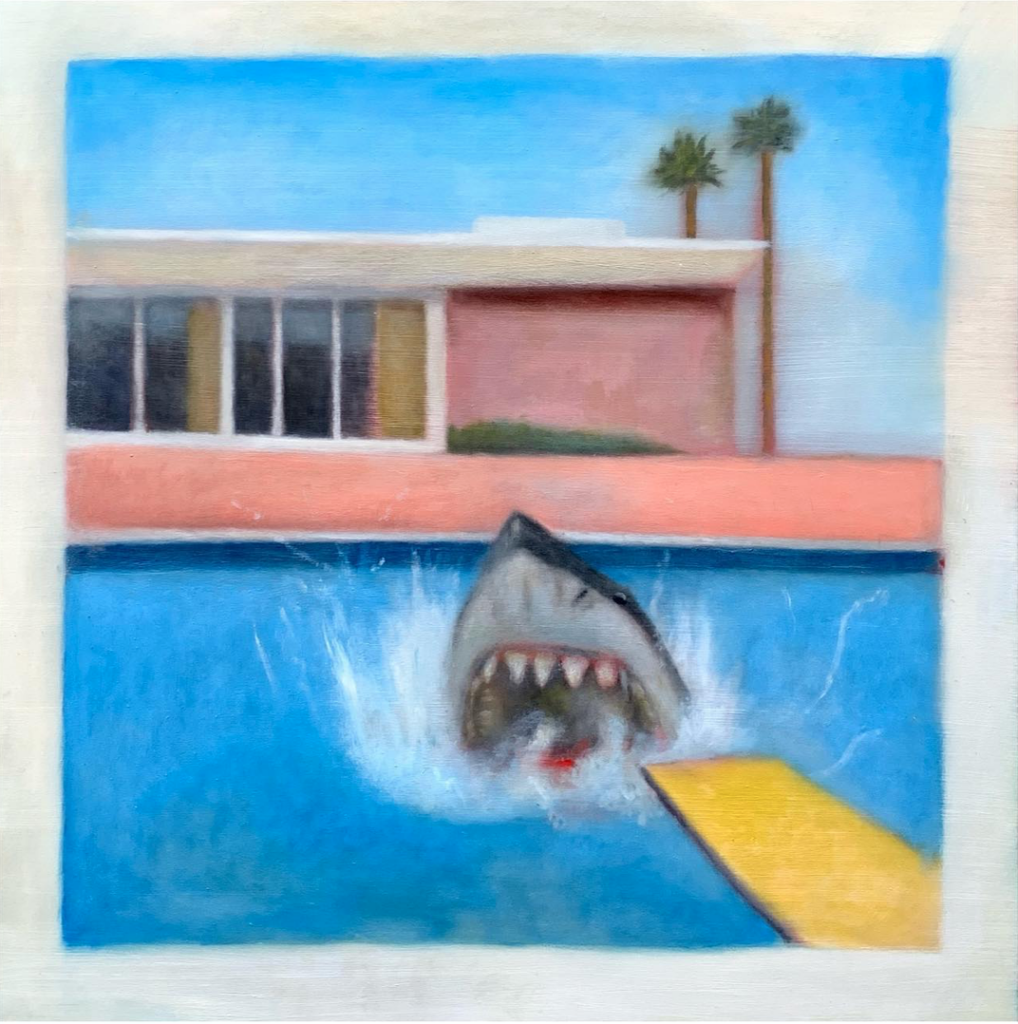
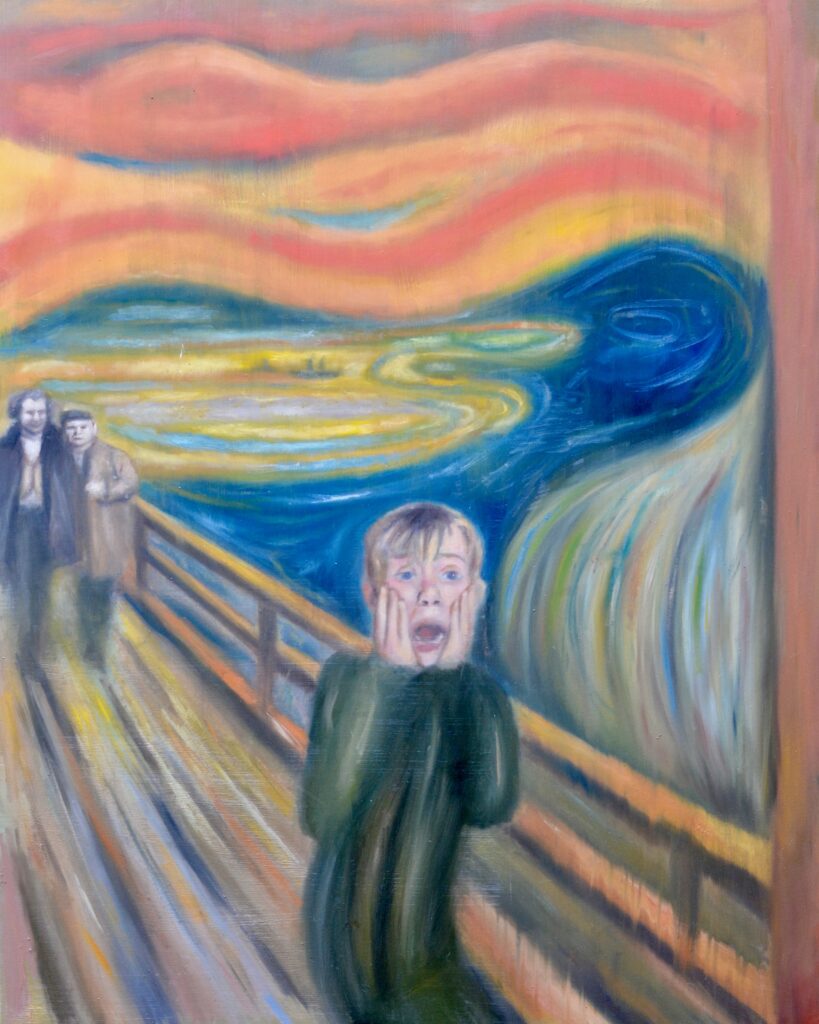
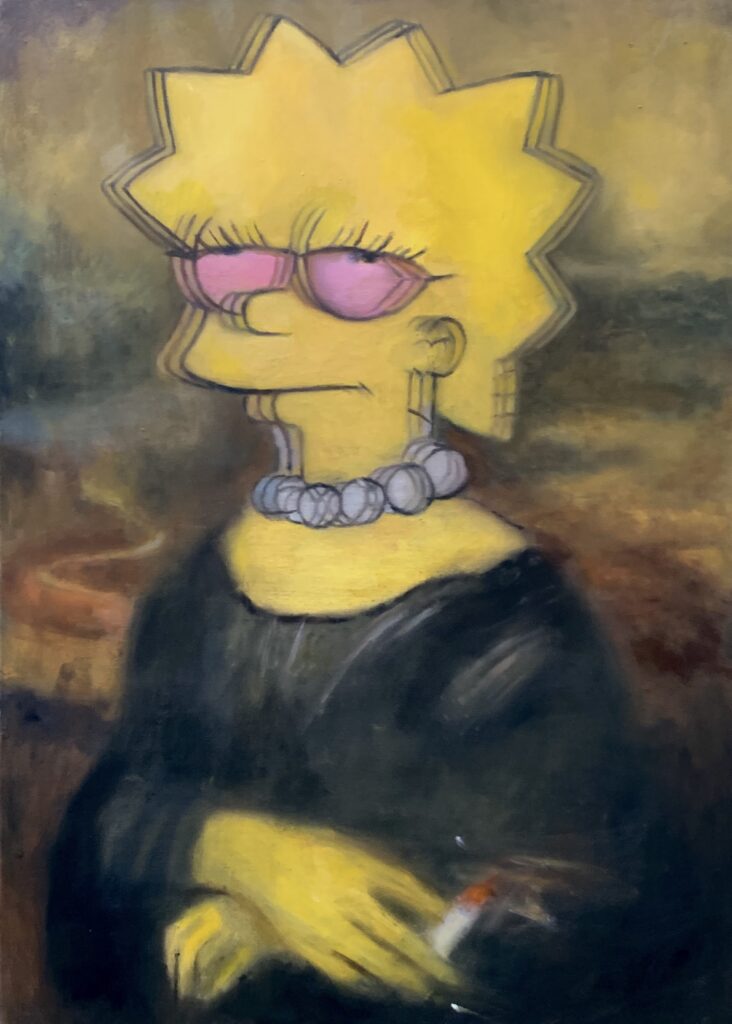
You also paint iconic paintings such as “The scream” and “Mona Lisa”. When choosing your paintings to give your twist on, is it because they have a deeper meaning to you? Or are you thinking that you can do something funny with them?
In terms of deciding which characters work in which paintings change from one piece to another. Sometimes I feel a certain character fits particularly well, like Stona Lisa with Lisa Simpson in da Vinci’s ‘Mona Lisa’ or Scream Alone where I put Macaulay Culkin’s Kevin and the Sticky Bandits from Home Alone in Munch’s ‘Scream’. For sure, comedy is a huge part of these juxtapositions, it is true that I originally set out with the intention of creating funny paintings. Simultaneously by using pop culture to subvert great masterpieces of art there is an opportunity to question viewers’ perceptions as well as the social value we place on certain images.
What inspires you?
Recently I visited Egypt and went horse riding in the desert next to the Pyramids as well as visiting the ancient Egyptian tombs and sites at Upper Egypt. Seeing the pyramids in real life blew me away and the huge statues of Pharaohs at Karnak where the walls were covered in hieroglyphics was incredible as well. It is extremely inspirational to see such ancient humans creating masterpieces of beauty.
Besides painting, what do you like doing?
Going to the cinema, 🙂
Who is your all time favorite artist?
Gerhard Richter