SCANNER
INVINCIBLE, MADNESS, and ASICS Carve Volcanic Obsidian Textures Into a Second GEL-KAYANO 12.1
Café Mountain and NANGA Chase the Mythical Hibagon up Mount Shichimen with a 770-Fill Down Jacket
Nike and Jun Takahashi Snap a Five-Year Gyakusou Silence with AeroLoft Down, Alphafly 4 SP, and Vomero...
Curtis Holder and the Language of Drawing
Adrián Villar Rojas Imagines a World Beyond Humanity at Oslo’s National Museum
Moncler and Rick Owens Tap Joe Dallesandro for FW26
Ferragamo and The Five Minute Journal Celebrate the Value of Small Moments
Jocelyn Lee and the Beauty of Being Human
Mountain Research and TAION Fuse Archival General Research Embroidery with Reversible Sukajan Down Shells
Mario Sorrenti Rips Open 1990s Xerox Diaries and Polaroid Scars at LSD in Paris
OVERSTANDARD – Culture & Creativity
  • FASHION
  • ART & DESIGN
  • INNERVIEWS
  • ARTICLES
  • PHOTOGRAPHY
Tag:

Willumsens Museum

    ART & DESIGN

    Lars von Trier Turns Willumsens Museum Into a Map of His Cinematic Obsessions

    by OS Staff July 15, 2026
    written by OS Staff
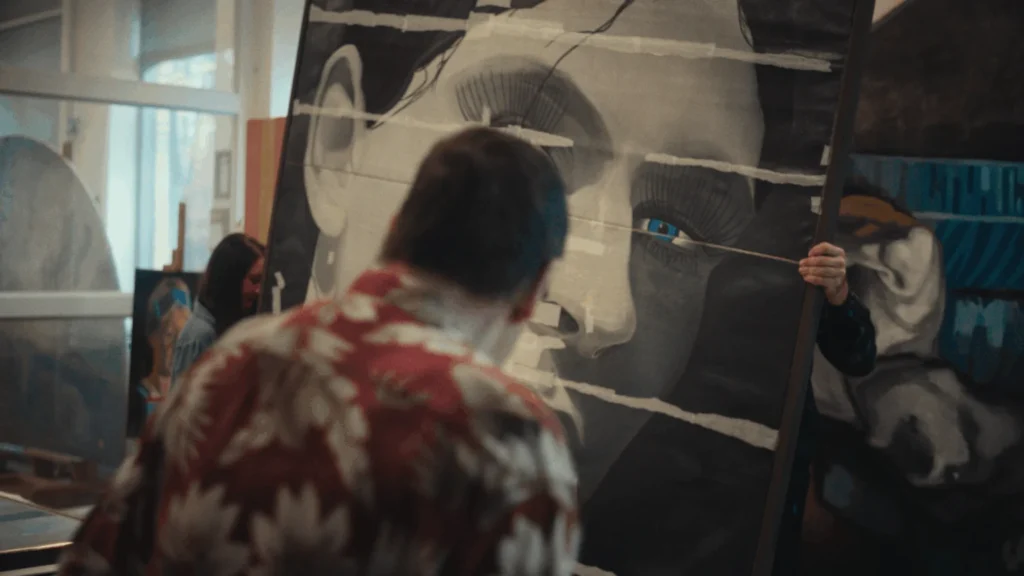
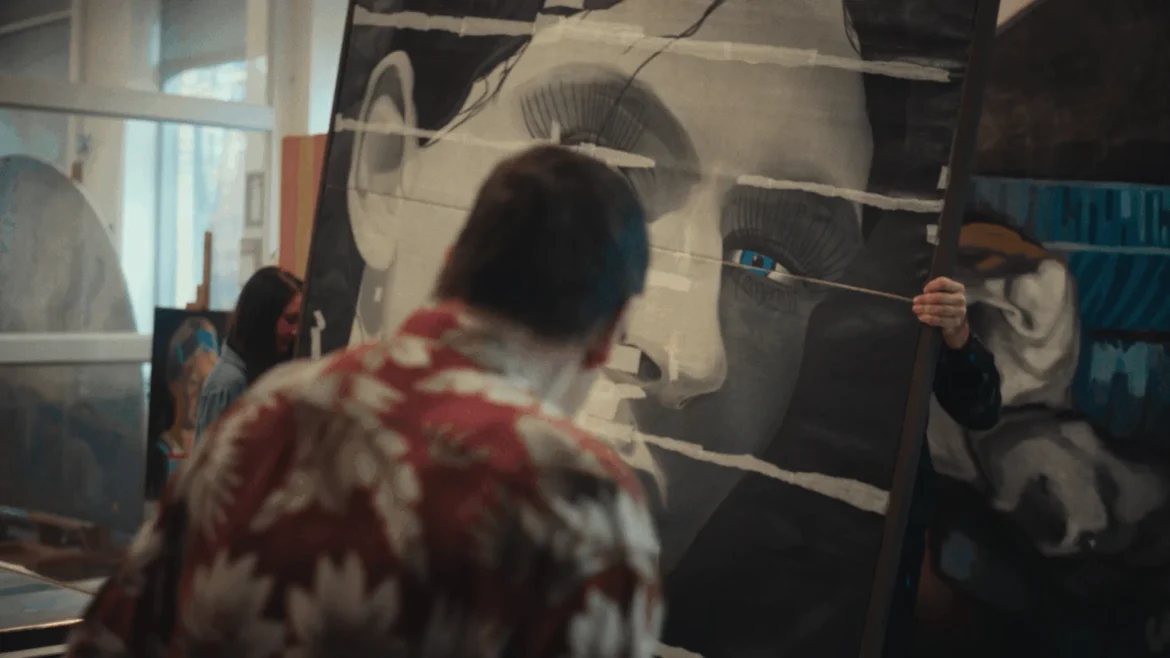
    Exhibition film by AGNES TRIER, 2026 The film is included in the exhibition Descendant–curated by LARS VON TRIER
    © ISAAC PRODUCTION Photography by EMIL AAGAARD

    Before Lars von Trier became one of cinema’s most divisive and magnetic directors, he was a young man looking at paintings. Silent rooms, anxious faces, sick children, haunted landscapes, bodies bent by fear or longing. Images that did not explain themselves, but stayed.

    With Descendant, on view at Willumsens Museum in Frederikssund, Denmark, von Trier turns curator, gathering the Nordic artists whose work has shaped the visual and emotional language of his films. Running from June 6 to September 20, 2026, before travelling to Thiel Gallery in Stockholm from October 10, 2026 to January 24, 2027, the exhibition offers a rare look not at von Trier’s cinema directly, but at the image-world behind it.
    LARS VON TRIER during preparations for the exhibition On Whose Shoulders Photography by EMIL AAGARD, 2025

    The show brings together works by artists including Vilhelm Hammershøi, Edvard Munch, August Strindberg, Carl Fredrik Hill, Per Kirkeby, J. F. Willumsen, Ejnar Nielsen, Rudolph Tegner, Gustav Vigeland, and Paul Gauguin. Von Trier has described them as a kind of artistic “family”: figures he has returned to since adolescence, building what feels less like an influence list than a private visual ancestry.

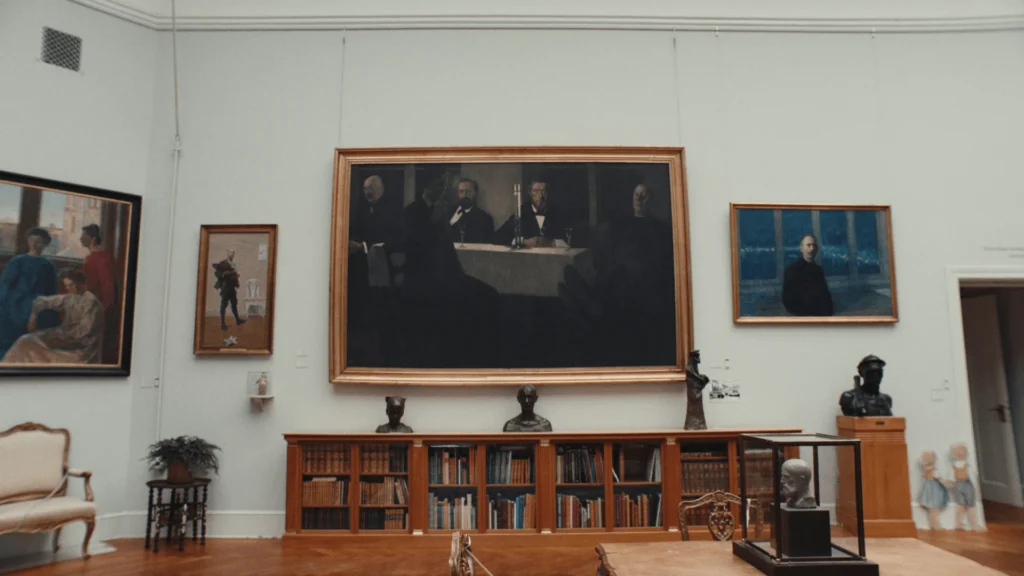
    At the centre of the exhibition is Hammershøi’s Five Portraits from 1902, a painting that reportedly pushed von Trier to travel to Stockholm at just 19. It is easy to understand the charge. Hammershøi’s silence, restraint, and psychological stillness seem to echo through von Trier’s own cinema, where rooms often feel like moral traps and faces hold more tension than action ever could.
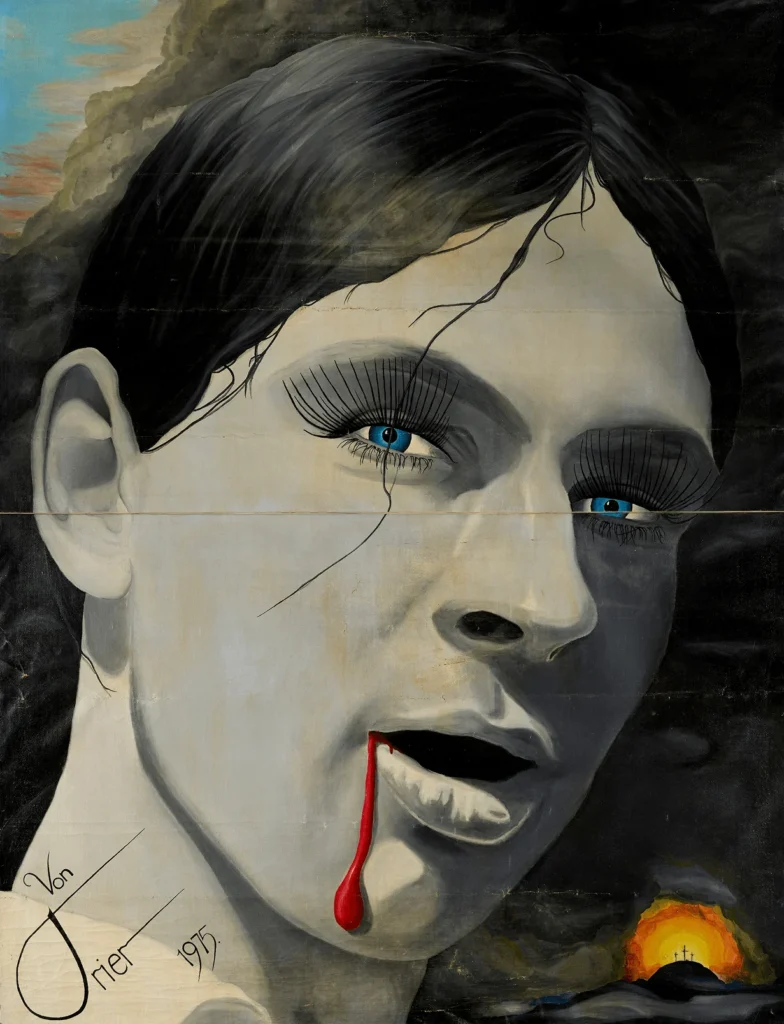
    LARS VON TRIER On the Way to Zarathustra, 1975 Courtesy of FREDERIKSBORG CASTLE
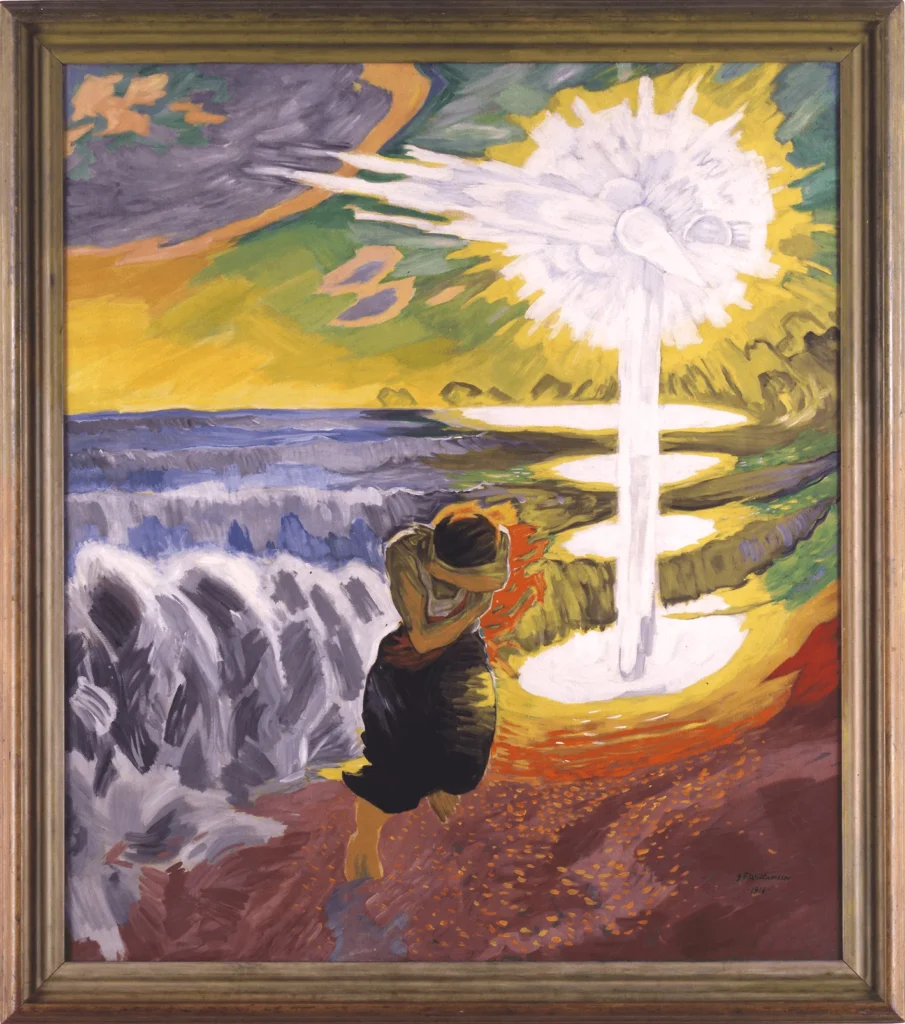
    J. F. WILLUMSEN Naturskraek, 1916 Courtesy of WILLUMSENS MUSEUM

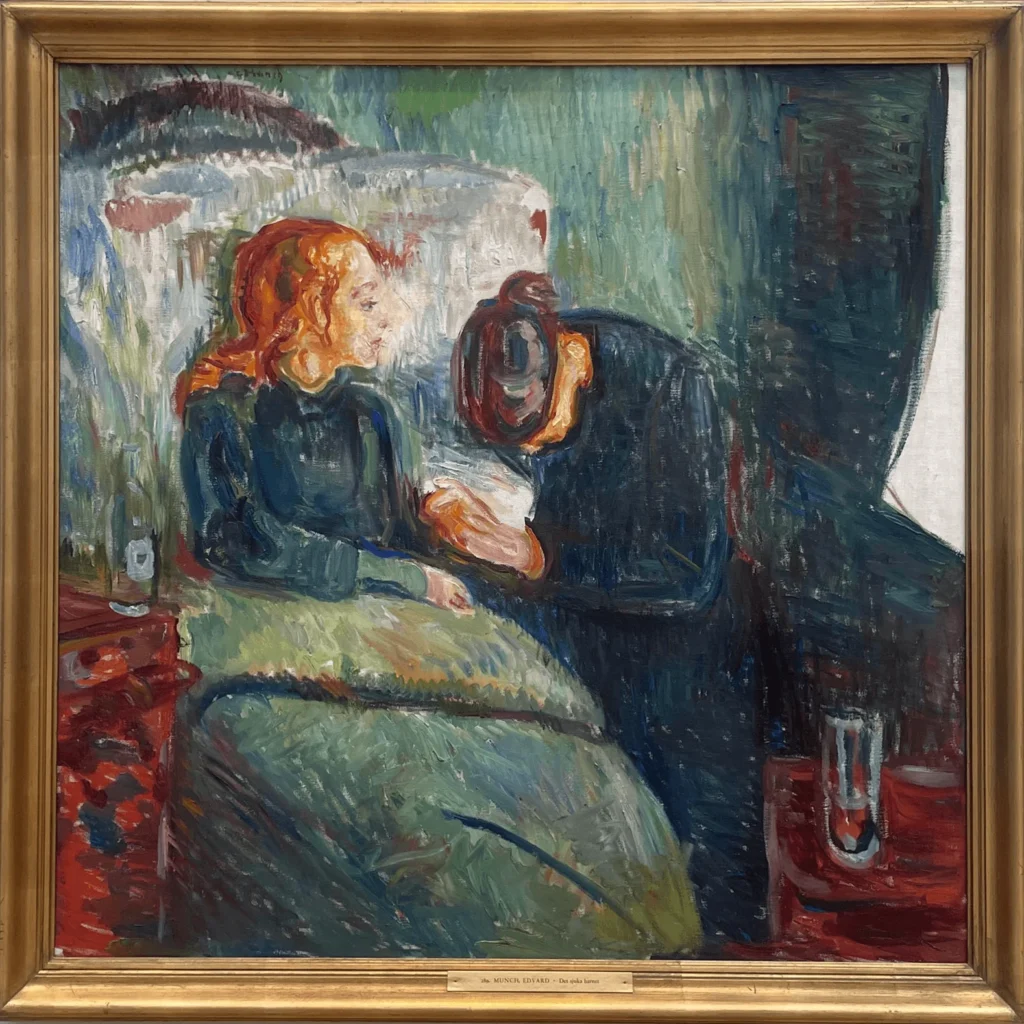
    But Descendant is not only about visual references. It is about inheritance. Munch’s psychological intensity, Hill’s dream logic, Strindberg’s expressive turbulence, and Willumsen’s dramatic bodies all seem to point toward the emotional weather of films like Breaking the Waves, Dancer in the Dark, Dogville, Melancholia, and Nymphomaniac. Von Trier’s cinema has always felt painted as much as filmed: theatrical, feverish, cruel, intimate, and full of images that behave like wounds.
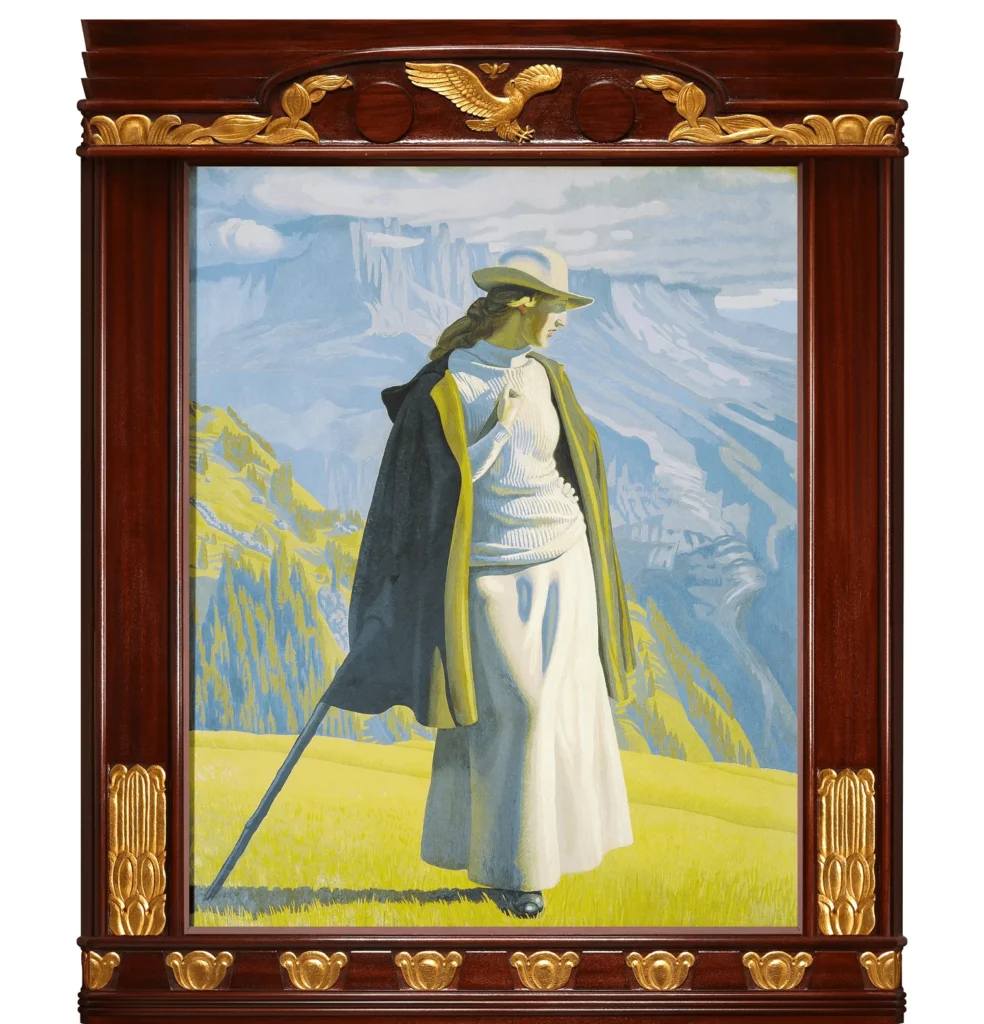
    J. F. WILLUMSEN A Female Mountaineer, 1904, Courtesy of HAGEMANN’S COLLEGE
    EDVARD MUNCH The sick child, 1907 Courtesy of THIELSKA GALLERIET
    LARS VON TRIER during preparations for the exhibition On Whose Shoulders; photography by EMIL AAGARD, 2025

    There is something revealing about seeing a filmmaker known for control, provocation, and formal games step into the role of curator. Here, he is not explaining himself through interviews or defending a filmography. He is arranging the ghosts around him. The exhibition becomes a self-portrait without the artist at the centre: a map of the images that looked back at him before he learned how to make his own.

    The accompanying publication includes texts by Karl Ove Knausgård, Lilian Munk Rösing, Erik Steffensen, Annette Rosenvold Hvidt, Anne Gregersen, and von Trier himself, extending the exhibition into a broader reflection on the deep affinities between his cinematic universe and Nordic art.

    Share this:

    • Tweet
    • Share on Telegram (Opens in new window) Telegram
    • Share on WhatsApp (Opens in new window) WhatsApp
    • More
    • Print (Opens in new window) Print
    • Share on Reddit (Opens in new window) Reddit
    July 15, 2026 0 comment
    0 FacebookTwitterEmail

SIGN UP FOR OUR NEWSLETTER

Categories

  • ART & DESIGN
  • ARTICLES
  • CINE
  • CULTURE
  • FASHION
  • GAMING
  • INNERVIEWS
  • LIFESTYLE
  • MUSIC
  • PHOTOGRAPHY
  • SPORTS
  • TECH
  • TOYS

Categories

  • ART & DESIGN (949)
  • ARTICLES (28)
  • CINE (187)
  • CULTURE (247)
  • FASHION (2,281)
  • GAMING (58)
  • INNERVIEWS (474)
  • LIFESTYLE (110)
  • MUSIC (97)
  • PHOTOGRAPHY (87)
  • SPORTS (36)
  • TECH (112)
  • TOYS (122)

Recent Posts

  • INVINCIBLE, MADNESS, and ASICS Carve Volcanic Obsidian Textures Into a Second GEL-KAYANO 12.1
  • Café Mountain and NANGA Chase the Mythical Hibagon up Mount Shichimen with a 770-Fill Down Jacket
  • Nike and Jun Takahashi Snap a Five-Year Gyakusou Silence with AeroLoft Down, Alphafly 4 SP, and Vomero Plus SP
  • Curtis Holder and the Language of Drawing
  • Adrián Villar Rojas Imagines a World Beyond Humanity at Oslo’s National Museum

© OVERSTANDARD

OVERSTANDARD – Culture & Creativity
  • FASHION
  • ART & DESIGN
  • INNERVIEWS
  • ARTICLES
  • PHOTOGRAPHY